Sam Altman Warns World Unprepared as OpenAI Uses AI to Accelerate AGI Research
This article was written by AI based on multiple news sources.Read original source →
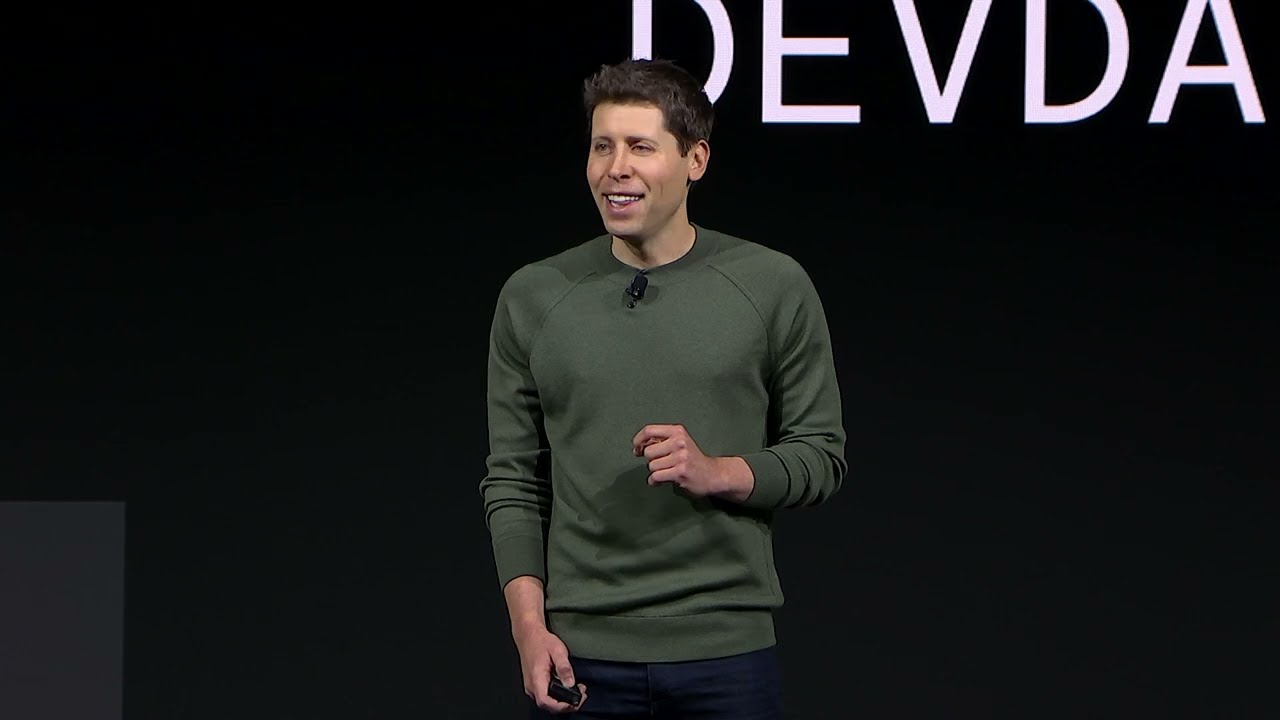
In a stark assessment of the current technological trajectory, OpenAI CEO Sam Altman has declared that the world is not prepared for the rapid advancements in artificial intelligence his company is pursuing. Speaking at the Express Adda event, Altman suggested that the internal use of AI is dramatically accelerating OpenAI's own research, bringing the arrival of artificial general intelligence (AGI) and even superintelligence closer than many anticipate. He described this accelerated pace as a source of significant stress and anxiety, marking a shift from his earlier expectations.
Altman's comments point to a self-reinforcing cycle where AI is used to build more powerful AI. He indicated that OpenAI already possesses internal models that surpass the capabilities of its publicly released systems, stating, "We're going to have extremely capable models soon." This internal acceleration is a key factor in his revised timeline. While not providing a specific date, he characterized AGI as being "pretty close" and suggested that superintelligence is also "not that far off." This perspective underscores a belief within the company that the development curve is steepening.
The practical implications of this acceleration are already visible in OpenAI's work. The company recently revealed that its latest coding model, Codex 5.3, was co-developed with the assistance of AI itself. This represents a tangible example of how AI tools are becoming integral to the research and development process, potentially creating a feedback loop that speeds innovation.
Altman extended his analysis to the profound impact on the workforce, arguing that the nature of many jobs is being fundamentally and rapidly reshaped. He used his own field as an example, stating, "The way I learned to write software is now effectively completely irrelevant." He predicted that while software developers will still exist, the practice of manually writing code in languages like C++ is "over." According to Altman, "Big categories of jobs AI is just going to completely obsolete," while others may remain largely unaffected.
He illustrated this economic shift with the field of graphic design. Simple, commissioned tasks like creating birthday invitations could be easily automated by AI. He observed that this has already created a stark price divergence: "the price of AI generated art is a zero and the price of human generated graphic art has continued to go up since this has happened." This suggests a future where AI handles commoditized creative work, potentially increasing the value of highly complex, strategic, or deeply human-centric artistic endeavors.
Altman's warnings carry a dual message: one of breathtaking technological promise and one of profound societal disruption. The core of his concern is a preparedness gap. The tools and systems that could redefine human capability are advancing at a pace that may outstrip our collective ability to manage their integration, regulate their use, and mitigate their risks. His statement is less a prediction of doom and more a call to attention, emphasizing that the conversational timelines around AGI are contracting, and the world's institutions, economies, and social frameworks need to accelerate their own adaptation to match the speed of innovation emerging from labs like OpenAI.
Key Points
- 1Sam Altman states the world is "not prepared" for rapid AI advances driven by using AI in research.
- 2OpenAI's internal AI use is accelerating development, making AGI "pretty close" and superintelligence "not that far off."
- 3Altman says the way he learned software development is "completely irrelevant" and manual coding like C++ is "over."
Altman's warning highlights an accelerating, self-reinforcing R&D cycle that could outpace societal adaptation, forcing urgent conversations on governance, workforce transition, and safety for AI professionals and policymakers.